French-American artist and founding member of Nouveau Réalisme, celebrated for his Accumulations of everyday objects
French-American, 1928–2005
Armand Pierre Fernandez was born in Nice in 1928, the son of an antiques dealer who was also an amateur painter, photographer and cellist. From his father he learned oil painting and photography, and a shop crowded with objects proved a fitting start for an artist who spent his life looking hard at things. After a degree in philosophy and mathematics, he studied at the École Nationale des Arts Décoratifs in Nice and then at the École du Louvre in Paris, focusing on archaeology and Asian art. At a judo class in Nice he met Yves Klein, and the two young men became close friends, setting off together on a hitch-hiking tour of Europe.
Read more
Around 1957 he began signing his work simply "Arman," using his first name alone as Van Gogh had signed "Vincent." His early rubber-stamp works grew into something bigger: by the late 1950s he was gathering everyday objects in quantity and presenting them as art. In 1960 he famously filled the Galerie Iris Clert in Paris with trash for an exhibition called Le Plein ("The Full"), a reply to Klein's Le Vide ("The Void") in the same space two years earlier. That October, Arman, Klein and a handful of other artists founded Nouveau Réalisme with the critic Pierre Restany, a movement that turned to the real objects of modern life.
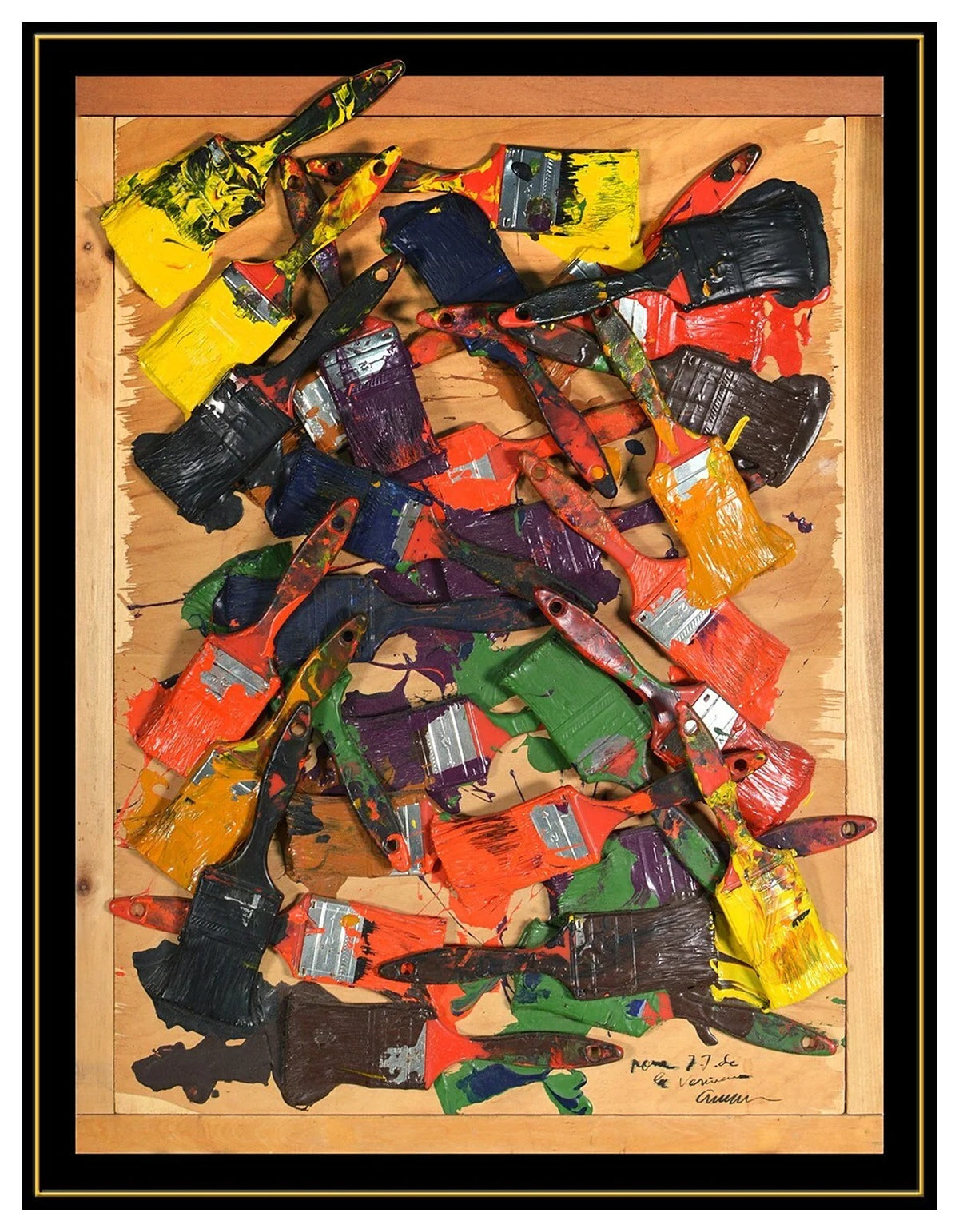
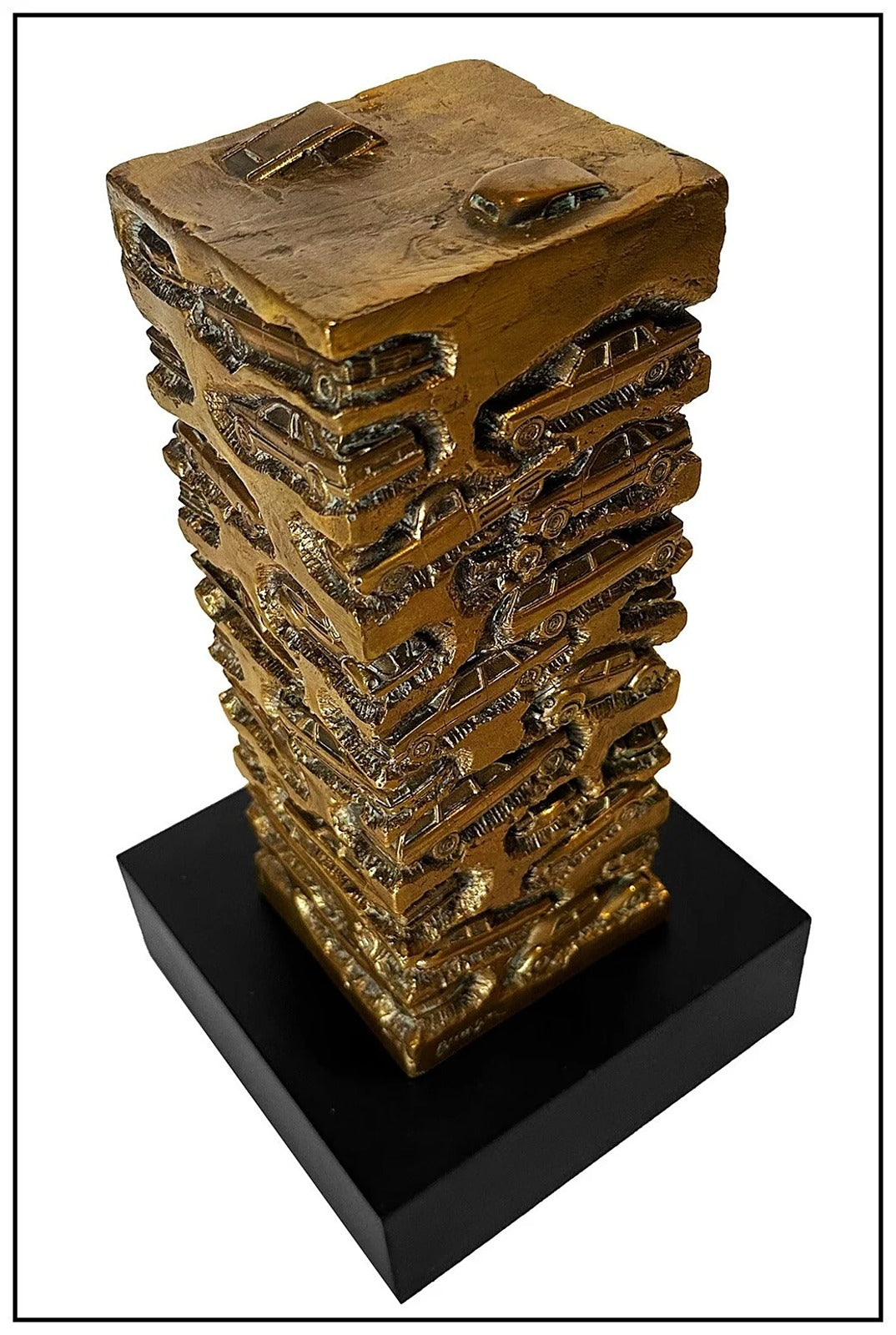
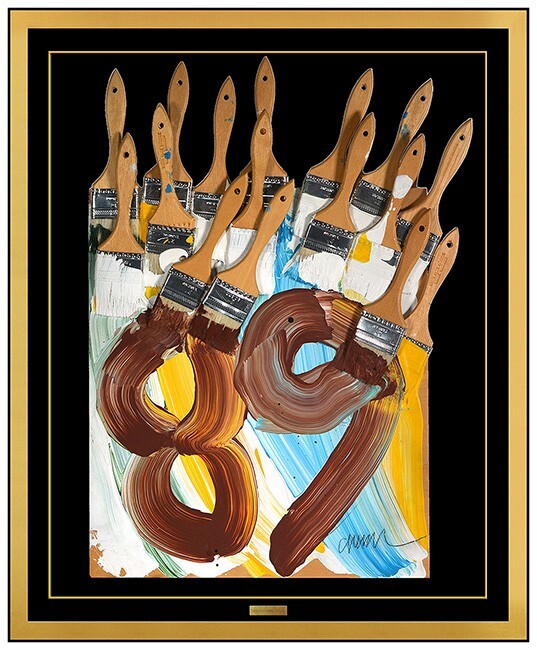
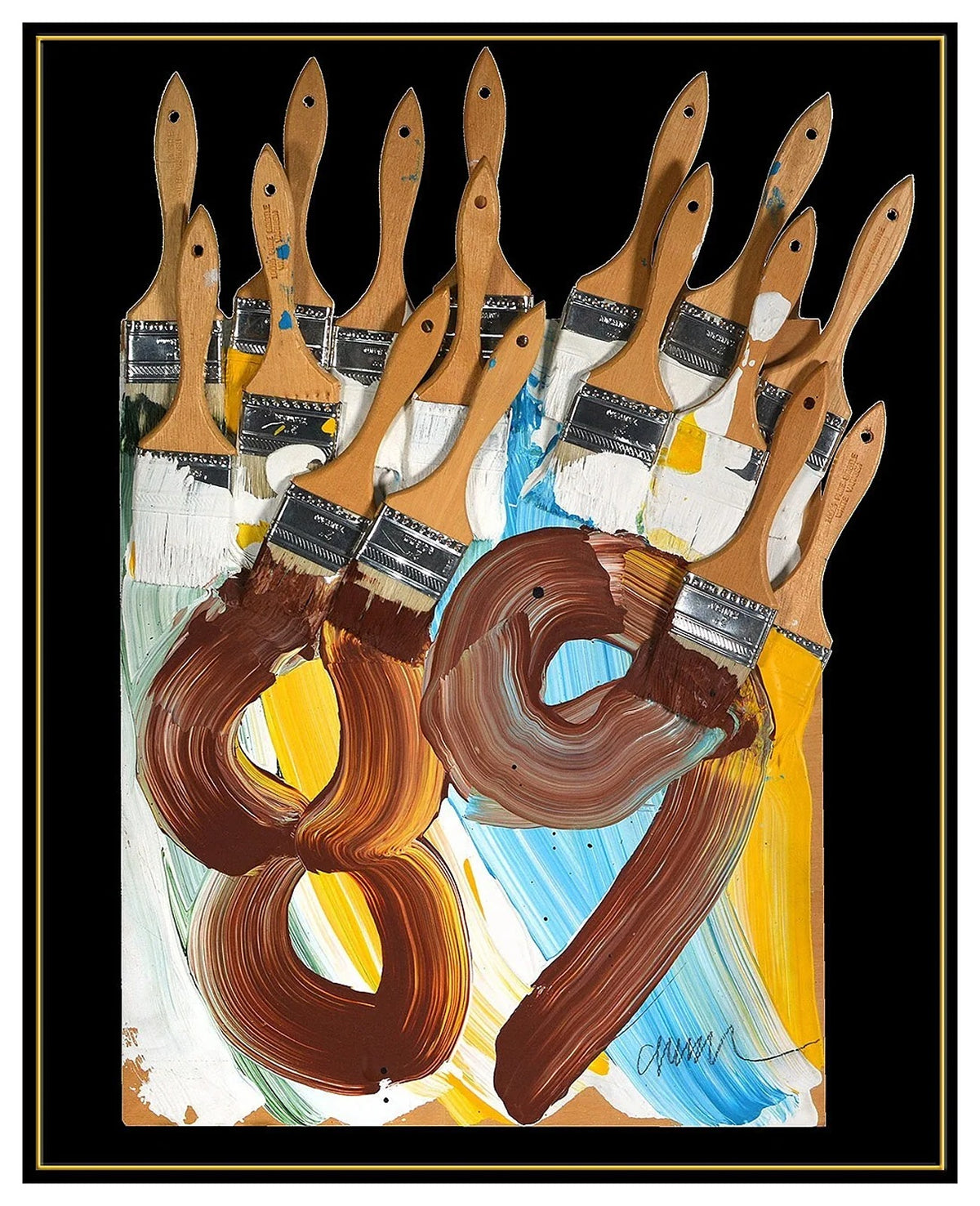
The Accumulations became his signature: dozens of identical things, from alarm clocks and paint brushes to tools, watches and musical instruments, gathered in resin, set in Plexiglas cases or welded together, so that ordinary objects took on a startling rhythm and beauty. Alongside them he made the Coupes ("Cuts") and Colères ("Angers"), in which violins, saxophones and other objects were sliced, burned or smashed, an idea he described as creation through destruction. Later, through his work with a foundry in Normandy, bronze and musical instruments became major motifs.
Arman made his American debut in 1961 and came to see the United States as a second home. In New York he lived first at the Chelsea Hotel, met Marcel Duchamp and appeared in an Andy Warhol film; Warhol himself owned several of his works. In 1964 his first museum retrospectives opened at the Stedelijk Museum in Amsterdam and at the Walker Art Center, here in Minneapolis. He became an American citizen in 1973.
He also thought on a monumental scale. Long Term Parking, completed in 1982, stacks 60 cars in concrete at Jouy-en-Josas, outside Paris, and in Beirut his Hope for Peace (1995) rises from 83 tanks and military vehicles. Major retrospectives followed at the Brooklyn Museum, the Jeu de Paume in Paris and, after his death in New York in 2005, the Centre Pompidou. Some of his ashes rest in Paris's Père Lachaise Cemetery.
Why collectors love Arman
Arman turned ordinary objects into something unforgettable, and his Accumulations are recognizable from across a room. As a founder of Nouveau Réalisme and a friend of Yves Klein, Duchamp and Warhol, he stands at the crossroads of Dada, Pop and assemblage. Works in his classic materials, such as clocks, paint brushes and bronze, show the very ideas that made his name.
Known for
Accumulations of everyday objects, objects set in resin and Plexiglas, sliced and smashed instruments (Coupes and Colères), bronze sculpture, monumental public works
Highlights
- Co-founder of Nouveau Réalisme (1960)
- first museum retrospectives at the Stedelijk Museum and the Walker Art Center (1964)
- Long Term Parking, a tower of 60 cars in concrete (1982)
- retrospectives at the Brooklyn Museum (1991), Jeu de Paume (1998) and Centre Pompidou (2010)